
Engineered wood floors (and to some extent solid wood floors) respond well to underfloor heating and are comparatively much easier to maintain compared to vitrified tiles. This makes wood floors the ideal choice for indoor use. Vitrified tiles are difficult to remove and possess hard-wearing all-weather characteristics suitable for outdoor use (e.g. patios).
What is a Vitrified Tile?
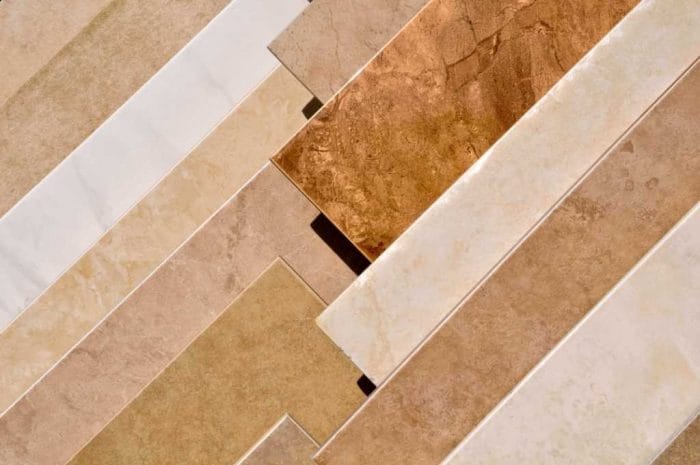
Unlike standard ceramic flooring, vitrified tiles contain quartz and feldspar. When heated in a kiln, quartz and feldspar melt together to form a glass-like glue that binds the clay tile together. This not only adds strength but also reduces the porosity of the tile from an average 3% – 7% to 0.5% (which is considered to be not only waterproof, but is also seen as virtually frost proof).
Indoor or outdoor? Vitrified tiles come in any colour, with unglazed natural-look options that offer tremendous all-weather rough surfaces ideal for hard-wearing outdoor use (e.g. garden/patio). In terms of indoor use, vitrified tiles are cold underfoot and can prove difficult to heat. Replacing chipped tiles is also a problematic DIY project requiring careful tile removal, new cement, and new grouting.
Wood Flooring vs Vitrified Tiles
Hardwood floors and engineered ‘tongue and groove’ wooden floors are not generally suitable for outdoor use (the notable exception to outdoor wooden floors is decking, which is machined and appropriately treated to be suitable for the task). Unglazed vitrified tiles, however, are the stand out durable frost proof option for outdoor use. Let’s look at further benefits of wood over tile for indoor use.
Benefits of choosing wood flooring over vitrified tiles for indoor use:
- Underfloor Heating
When fitting a new floor, consider the choice of flooring materials in terms of suitability with existing heating solutions (especially underfloor heating). Vitrified tile will not heat up or cool down quickly, which could result in increased heating bills and an uncomfortable lingering warmth that does not dissipate once the heating is switched off. Solid wood floors may present similar issues dependant on the type and thickness of the wood and the distance of the heat source from the wood. Instead, opt for engineered wood floors for optimal results in respect of heating and cooling within desired time frames. - Installation (and ease of maintenance)
Vitrified tiles are likely to present comparatively greater installation difficulties as compared to wood floors. Whereas the tiles require careful planning, cement, grouting, and cutting tools, engineered wood floors clip together and can be more easily cut to fit the shape of the room. Maintaining an engineered wood floor is also comparatively much easier when compared to vitrified tiles. As opposed to heavy duty tile removal/replacement, engineered wood flooring planks can be individually removed and replaced with relative ease. Wood floors can also be sanded and refinished to extend the life of the floor. - Sound Absorption
Vitrified tiles present greater sound absorption issues compared to wood floors, leading to echoing. Vitrified tiles could therefore pose potential noise level issues – particularly for young families (excessive noise levels could prevent children from settling at bedtime). There is also a less homely element of hollow sounding echoes that could reduce the enjoyment of owning such a floor. In contrast, wooden floors offer a greater level of sound absorbance.
