How to Clean Laminate Flooring
With advances in the the floor's development resulting in an exceptionally hygienic, durable, and affordable alternative to hardwood, there is little surprise that it has become an increasingly popular type of floor covering. It is also easy to maintain and keep clean – especially if you’ve got the right tips and tricks. Here at Discount Flooring Depot, we’ve created a guide to how to clean and maintain it, including all you need to know about care, to ensure it remains a stunning feature in your home for years to come.
Preventative Measures To Maximise The Life
- Place a high quality mat at all entrances to capture dust, stones, small pebbles and grit, or anything else that might mark the surface.
- Lift heavy furniture rather than pushing it along the floor. This will avoid gouging cased by the friction between the legs or wheels.
- Use protective felt pieces or soft rubber pads on the legs of chairs and other movable furniture. Regularly check if the protection is still in good condition and replace when worn.
- Wheels under furniture should be of the soft rubber type to help avoid damage. If you already have brass wheels on your furniture you can protect the floor with wooden or composite cups which can be placed under them.
- Cleaning heads and wheels of vacuum cleaners should also be made of soft rubber and easily swivelling. It may be better using a soft head brush instead of a vacuum.
- Make sure that the hard bottom side of the cleaning head does not touch and scratch the floor.
Should I Use Water and Steam Cleaners on Laminate Floors?
We strongly against using a steam cleaner. Excess water and steam can cause the joints between the planks to expand, permanently damaging the floor. The correct way to clean laminate flooring is to use a laminate cleaning spray and microfibre mop. This will avoid water damage yet keep the product clean and hygienic.
How Do You Repair Laminate Flooring?
Minor damage (such as scratches or small indentations made by objects falling onto the floor) can be repaired with a laminate repair kit. These kits come with a number of colours that can be mixed to match with the colour of the damaged floor. They can be bought from many good online retailers, such as Amazon.
How Do You Remove Scuff Marks from a Laminate Floor?
It is recommended to use a vinegar-based solution. Spray this over the area where the scuffmark is, give it time to soak in, then use a light steel wool pad to lightly rub it over the area. The scuffmark should come out.
The above technique will work on the most stubborn of scuff marks, but most will be much easier to remove. A sock or soft cloth can be used, or another method that people use is to rub a tennis ball over the scuffmark.
Standard Cleaning
Regular Brushing
Mop for Laminate Flooring
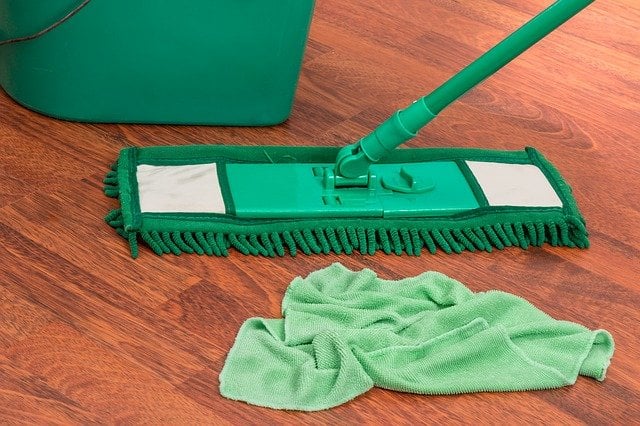
You can buy specialist mops for laminate flooring made from soft microfibre which will not damage the surface of the floor. There are many on the market from brands like Vileda, and some come with an integrated cleaning spray. First things first;
1. Ensure the floor is well swept and dusted using a dry microfibre mop. The floor is scratch resistant, but any build up of hair, dirt, or any other debris can cause scratches to develop if they’re allowed to build up or are ground into the floor by shoes and feet.
2. Simply sweep across the floor every few days to gather up any debris and dirt. Make sure you sweep in the direction the floor was laid in order to scoop up any dust and grime from the grooves between the planks.
Avoid using a standard floor brush to do this, as the stiff bristles could cause accidental damage and scratches to your floor.
Cleaning Products
What's The Best Laminate Floor Cleaner?
When it comes cleaning laminate flooring after you’ve swept up, there are only a couple of tools and cleaning products you need to have to hand:
- A laminate floor mop
- Laminate floor cleaner
Whenever you need to give your floor a proper clean down, simply use a damp mop (using the integrated spray if your mop includes this) and some cleaner to wipe away everyday dirt and grime build-up. Always check before using which cleaning products are suitable for your floor.
Remember: Never soak your floor or use products not appropriate for laminate. If liquid soaks through into the underlayers it can cause warping and damage. Any liquid left on the floor can also stain the surface and damage the protective layer.. Always use a damp mop that doesn’t allow water to pool.
Cleaning Spills & Stains
Spills
How Do You Dealing With Spills on Laminate Flooring?
Spills inevitably happen day-to-day. The important thing is to deal with them quickly and not allow any liquid to sit on the floor.
Soak up any excess liquid with a dry cloth, then dampen the cloth or sponge before spot cleaning your spillage. After you’ve finished, dry the floor with a dry cloth or towel.
Stains & Other Stubborn Marks
Cleaning Laminate Flooring Stains
When it comes to tackling stains, there are a few handy tricks to try. We’ve listed some of the most common occurrences and how to safely and effectively clean them without damaging your floor.

Red wine, built-in dirt and grime
Cleaning Laminate Floor Stains
When it comes to wine stains, or similar, a natural, vinegar-based cleaning solution works wonders. It's especially effective on lighter coloured floors.
Technique:
Add a quarter of a cup of vinegar in a litre spray bottle filled with hot water and add a squirt of washing-up liquid. A quick spray and wipe will clean your floor and leave it gleaming. Just don’t leave it for too long, as you can wear away the protective coating on top of your floor. Any liquid left on the floor could seep into the gaps in between the planks, so a little care is needed.
Removing Hard wax and Chewing gum
Using a plastic knife (never a metal knife), gently scrape underneath the gum or wax. Once you’ve removed the worst of it, gently remove any residue with a warm, slightly damp cloth.
Shoe scuffs
Removing Laminate Floor Scuffs
It's so easy to scuff a floor as not all shoe and trainer soles are scuff resistant. Certain rubbers that are used in shoe manufacture don't scuff - you'll find them on gym shoes and special trainers, but real rubber will leave a mark if the shoe is dragged along the floor. The heel of many court shoes and stilettoes is often made from hard rubber which can leave mark as well.
Simple Technique:
Use a simple eraser to rub over scuff and heel marks until they fade away and disappear. Then wipe the area with a slightly damp cloth. There are some erasers that have a gritty feel to them. These are used to remove pen from paper and should be avoided, as they will have a scouring effect on the top layer of teh flooring which may fade the colour/design.
Tip:
Never scrub your floor with a wire brush or a Brillo pad. You may get rid of the mess or your stain, but you’ll leave unsightly scratches behind. Wipe stains gently but firmly with a soft cloth or cleaning pad.
Removing Nail varnish and shoe polish
If you’ve got a pesky shoe polish stain or a bit of nail varnish on your laminate you can remove it with acetone nail polish remover. Add a little remover to a microfibre cloth and gently wipe until it lifts. Afterwards, wipe the solution away with a fresh, lightly damp cloth before drying.
Maintenance
Maintaining Laminate Flooring - Further Tips
Once you know how to clean laminate flooring, all that’s left to know is how to maintain it’s appearance. We’ve got some on floor care that will ensure yours is kept always looking its best:
All types of flooring regardless of thickness or design can become scratched or worn particularly by sharp objects.
- Place a high quality mat at all entrances to capture dust, stones, sand and gravel.
- Use protective felt pieces or soft rubber pads on chairs or other movable furniture. Regularly check if the protection is still in good condition and replace when worn.
- Wheels under furniture should be of the soft rubber type to help avoid damage.
- Cleaning heads and wheels of vacuum cleaners should also be made of soft rubber and easily swivelling, you may be better using a soft head brush instead of a vacuum.
- Make sure that the hard bottom side of the cleaning head does not touch and scratch the floor.
- Use soft brushes if you want to clean a laminate floor, preferably use a sweeper brush with soft hair.
Ongoing Laminate Repairs
Minor damage (such as deeper scratches or small indentations made by an object that has fallen) can be repaired with a repair kit. These kits usually have a number of colours that must be mixed to give a close as possible match with the colour of the damaged floor.